Martech

What to include in a one-page martech RFP that finds a best-of-breed tool under £5k/year

I’ve written and reviewed more martech RFPs than I care to admit—and most of them are bloated, vague, and ignored by vendors. When you’re shopping for a best-of-breed tool that must sit under a strict budget (say, £5k/year), the RFP needs to be short, sharp and purpose-driven. A one-page RFP forces clarity: you get faster, more comparable responses and can shortlist tools that actually meet the business need without drowning in feature...

Read more...

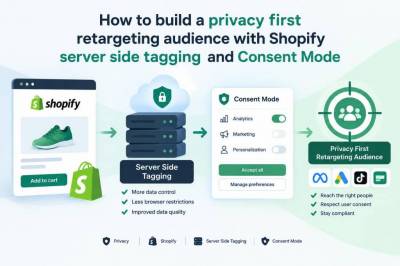
How to build a privacy-first retargeting audience with Shopify, server-side tagging and Consent Mode

I’ve been building retargeting audiences for years, and the landscape has shifted under our feet: browsers clamp cookies, platforms limit cross-site tracking, and privacy regulations and consent banners are now central to any measurement plan. That doesn’t mean retargeting is dead — it means we need to be smarter about how we collect signals. In this piece I’ll walk through a practical, privacy-first approach to building a retargeting...

Read more...

How to pick a martech stack for a two-person team that supports privacy-first retargeting under £5k/year

I’ve built and advised small teams on tight budgets enough times to know the pressure: you need measurable growth, modern capabilities like retargeting, and you must respect privacy and compliance — all without ballooning costs or hiring an engineering team. Here’s a pragmatic way to pick a martech stack for a two-person team that supports privacy-first retargeting for under £5k/year.Define the problem, not the techBefore you buy...

Read more...

How to build a privacy-first first-party attribution layer using server-side events and a low-cost data warehouse

I want to walk you through a practical, privacy-first approach to building a first-party attribution layer. Over the last few years I've helped teams move away from black-box, third-party trackers toward server-side event collection and a compact, low-cost data warehouse that gives reliable attribution without leaking user data to ad platforms.This is not theory — it’s a pragmatic architecture you can stand up quickly, iterate on, and keep...

Read more...

A 5-step checklist to validate generative ai marketing copy without hallucinations or seo loss

I use generative AI for marketing copy all the time — landing pages, social hooks, product descriptions — but I don’t trust it blindly. Left unchecked, AI can invent facts (hallucinate), introduce subtle SEO problems, or produce copy that reads well but won’t convert. Over the last couple of years I’ve refined a short, repeatable validation checklist that catches the usual failure modes without slowing down creative velocity. Here’s...

Read more...

How to build a privacy-first retargeting funnel with server-side google ads audiences

I started experimenting with server-side tagging for retargeting because I kept running into the same problem: great conversion lift from remarketing, but growing privacy controls (browser restrictions, ATT, cookie blocking) making client-side audiences noisy, incomplete or outright unavailable. Moving the audience-building logic server-side doesn’t magically restore all lost signals, but it gives you control — and the ability to combine...

Read more...

What exact ux copy lines lift signup conversion by 20% (with test-ready variants)

I’ve spent years A/B testing signup flows for SaaS products, consumer apps and newsletter gates. The single biggest lift I’ve seen repeatedly isn’t a new color or a fancier illustration — it’s the words you use at the moment people decide whether to commit. Tiny changes in UX copy can move the needle by double digits. Below I’ll share the exact lines I’ve tested that produced ~20% lifts in signup conversion, explain why they work,...

Read more...

A step-by-step framework to audit first-party data capture on signup flows and plug personalization leaks

Sign-up flows are where your relationship with a customer starts, and they’re also where a lot of valuable first-party data quietly leaks away. I’ve audited dozens of onboarding funnels for startups and established brands, and the pattern is familiar: forms that ask the wrong questions, tracking that never fires, and personalization systems that claim to do more than the data supports. This framework is a practical, step-by-step way to audit...

Read more...

A practical server-side tagging migration checklist to replace Google Tag Manager without breaking attribution

Moving your tagging from a client-side Google Tag Manager container to a server-side setup is one of those projects that promises cleaner data and better performance — and also has the potential to quietly break attribution across paid channels, analytics and CRO tools if you don’t plan carefully. I’ve run this migration a few times with clients and internal projects, and the single biggest lesson I keep coming back to is: treat the...

Read more...

A replacement checklist for switching off hubspot: what to migrate, what to keep, and hidden costs that break workflows

I’ve been on both sides of the HubSpot migration fence: helping teams extract value from the platform, and later helping them leave it. There’s a tidy allure to “switch off HubSpot” — lower recurring fees, more control, or a better fit for a particular stack — but the reality is messy. HubSpot is less a single product and more a cross-stitched ecosystem: CRM, marketing automation, CMS, services tools, analytics and dozens of...

Read more...